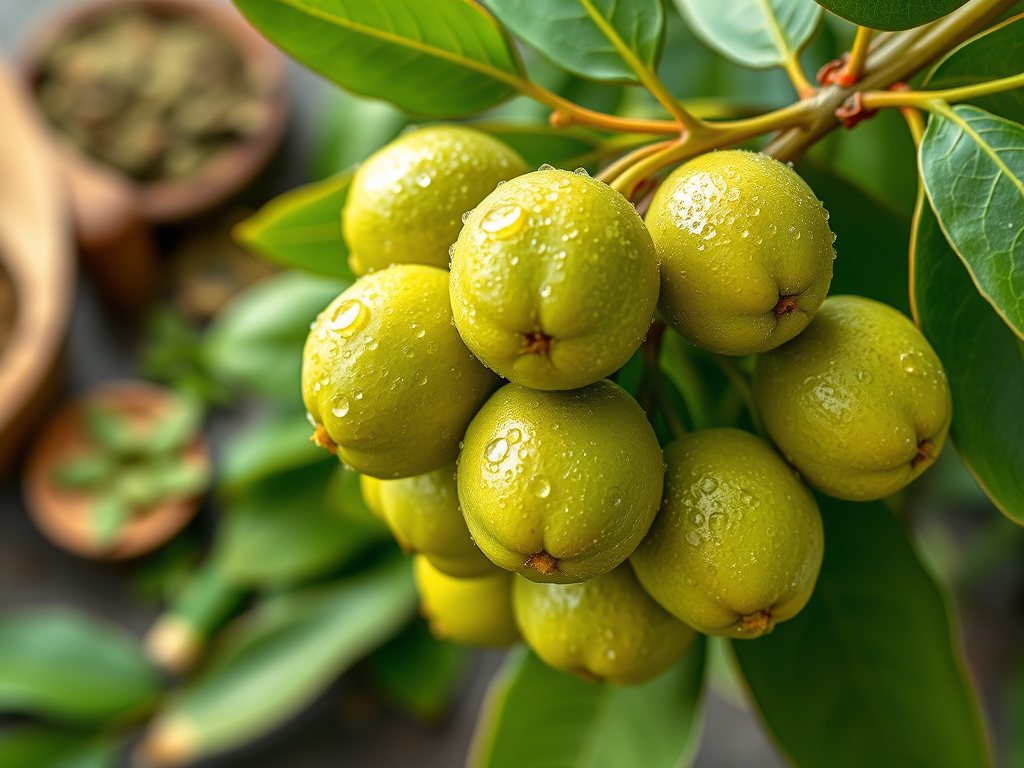
The fruit of Phyllanthus emblica, widely known as Amla or Indian gooseberry, is among the most extensively used botanical ingredients. It holds significant importance across medicinal systems, culinary practices, and cosmetic formulations. According to ancient Indian mythology, this tree is described as the very first tree manifested in the universe.
About Amla
Amla (Emblica officinalis) is found around the Indian subcontinent, China, Taiwan, Sri Lanka, and Malaysia. It is said to have come from tropical Southeast Asia.
Amla is recognized as a superior natural immunity enhancer, primarily because of its exceptionally high concentration of Vitamin C (ascorbic acid), which is nearly 20 times greater than that found in oranges.
In addition to Vitamin C, Amla contains multiple bioactive constituents that function together to strengthen immune health:
Tannins (Emblicanin A and B): These are key antioxidant molecules in Amla that safeguard Vitamin C from degradation during processes like heating or drying, thereby maintaining its stability and bioavailability.
Polyphenols (including Gallic acid and Ellagic acid): These compounds act as strong antioxidants, helping neutralize free radicals, decrease inflammation, and support proper immune cell activity.
Flavonoids: These enhance the functioning of white blood cells, reinforcing the body’s defense mechanisms against bacteria and viruses.
Chromium: This trace mineral assists in improving metabolic processes, thereby supporting overall physiological balance.
Distinct Features of Amla for Immune Support
Stable Vitamin C Content: Unlike many other fruits, Amla retains its Vitamin C potency even after being cooked, dried, or converted into powder.
Abundant Tannin Composition: Its unique antioxidant-tannin combination enhances immune responsiveness and supports detoxification.
Ayurvedic Rasayana: Within Ayurveda, Amla is categorized as a rejuvenating herb that nourishes “ojas” (vital life energy) and fortifies the body against infections.
Phyllanthus emblica is indigenous to India and regions of Southeast Asia. The fruit is abundant in biologically active compounds, making it valuable in research focused on natural therapeutic agents. Scientific investigations show that polyphenols and Vitamin C are the central active components present in the fruit and other parts of the plant. Their rich presence contributes to strong antioxidant properties and beneficial in-vivo effects, including enhancement of endogenous antioxidant defense mechanisms.
Additional potential health-supporting properties include antihyperlipidemic and antidiabetic effects, as well as anti-inflammatory, anticancer, digestive, and neuroprotective activities. Findings from various studies suggest that the bioactive compounds in Amla may play a meaningful role in promoting health and preventing disease.
Amla fruit is a substantial source of carbohydrates, exceeding 70 g per 100 g dry weight. It also provides dietary fiber (approximately 7.2–16.5 g/100 g dry weight), protein, essential minerals such as iron, calcium, and phosphorus, and small amounts of fat. Differences in nutrient composition may occur depending on the cultivar. Beyond Vitamin C, Amla also supplies vitamins A, B1, and E, contributing to its comprehensive nutritional profile.
Antioxidant Properties
The presence of Vitamin C, polyphenols, and tannins in Amla enables it to effectively neutralize reactive oxygen species (ROS), including superoxide radicals, hydroxyl radicals, nitric oxide, and malondialdehyde. These constituents also enhance internal antioxidant systems such as glutathione (GSH), catalase (CAT), glutathione peroxidase (GPx), and superoxide dismutase (SOD).
Experimental studies in animal models have shown that Amla supplementation can lower oxidative stress markers and increase antioxidant enzyme activity. In Alzheimer’s disease models, Amla powder reduced lipid peroxidation levels while elevating SOD and CAT activity, indicating neuroprotective potential. Studies in rodents exposed to chronic stress demonstrated that Amla extract reduced oxidative damage and improved reproductive parameters.
Vitamin C in Amla supports the synthesis of neurotransmitters such as norepinephrine through dopamine β-hydroxylase activity. Tannoid fractions of Amla have also demonstrated improvements in learning, memory, and reduction of neuronal cell damage in neurotoxicity models.
Metabolic Benefits
Amla exhibits notable anti-diabetic, cholesterol-lowering, and metabolism-supporting properties. Both experimental and clinical research support its role in improving glycemic control and lipid profiles. Its soluble fiber, ellagic acid, and polyphenolic compounds contribute to better metabolic balance and regulation.
Additional Health Advantages
Due to its richness in Vitamin A, phenolic compounds, and antioxidants, Amla supports skin repair and protects against oxidative damage. Clinical trials have shown that topical Amla formulations can enhance skin hydration, elasticity, tone, and reduce wrinkle formation. Laboratory findings also indicate protection against UV-induced damage and advanced glycation end products (AGEs), which are linked to aging.
Ayurvedic Perspective
In Ayurveda, Amla is classified as a Rasayana, meaning a rejuvenative substance. It is considered tridoshahara, balancing Vata, Pitta, and Kapha. It possesses five of the six Ayurvedic tastes: sour, sweet, bitter, astringent, and pungent.
Traditionally described benefits include:
1-Detoxification and purification of blood
2-Support of digestive strength
3-Nourishment of ojas (vital essence)
4-Cooling and anti-inflammatory effects
5-Enhancement of vision
6-Eating amla regularly lowers cholesterol and high blood pressure
Studies suggest that these compounds may support your body’s natural defences by enhancing the activity of protective enzymes and other molecules, such as glutathione, catalase, and superoxide dismutase, that protect against damage to cells and tissues. The unique combination of nutrients (Vitamin C, iron, and calcium) and bioactive compounds found in amla provides a natural, time-tested way to support health and vitality.
Home Remedies with Amla
To help with digestion, consume amla with half a teaspoon of rock candy and eat this before your meals.
Taking one or two fresh ripe fruits or dried amla can help with constipation.
Mix Amla powder and yoghurt to make a face pack for dry skin. If your skin is oily, mix it with rosewater. After 15 to 20 minutes, wash it off. Do this once a week. This face mask is a natural exfoliant that gets rid of dead skin cells and leaves your skin looking beautiful, clear, and glowing.
AyurVAID Chyavanaprasam is a classical Ayurveda formulation designed to strengthen immunity, enhance respiratory health, support digestion, and rejuvenate overall vitality
Amla fruits are a good source of carbohydrates, providing over 70 g per 100 g of dry weight.
Amla is a key component of classical Ayurvedic formulations such as:
1-Triphala
2-Chyawanprash
3-Nisakathakadi Kashayam
This is why it is quoted as the best among fruits.
अम्लं समधुरं तिक्तं कषायं कटुकं सरं।
चक्षुष्यम् सर्वदोषघ्नं वृष्यमामलकीफलम् ।।
हन्ति वातं तत् अम्लत्वात् पित्तं माधुर्यशैत्यत:।
कफं रुक्षकषायत्वात् फलेभ्यो अभ्यधिकं च तत्।।
Recommended Usage
-Consume 20–30 ml of fresh Amla juice daily on an empty stomach.
-Mix one teaspoon of Amla powder with warm water and honey for daily immune support.
-Choose pure Amla extract capsules or unsweetened dried candy for convenience.
-Take 10 g (approximately one teaspoon) of Chyawanprash in the morning; diabetics should opt for sugar-free variants.
Precautions
-Individuals with bleeding disorders or those scheduled for surgery within two weeks should avoid Amla due to its blood-thinning properties.
-People on anti-diabetic medication should consult a healthcare provider before use.
-Excessive intake may lead to gastrointestinal discomfort, diarrhea, or dryness of the skin.
Because of its exceptional nutritional composition, potent antioxidant capacity, and rejuvenating properties described in Ayurveda, Amla is widely regarded as one of the most beneficial fruits for enhancing immunity and overall health.
 NUTRITIOUS_PHONICS
Leave a comment