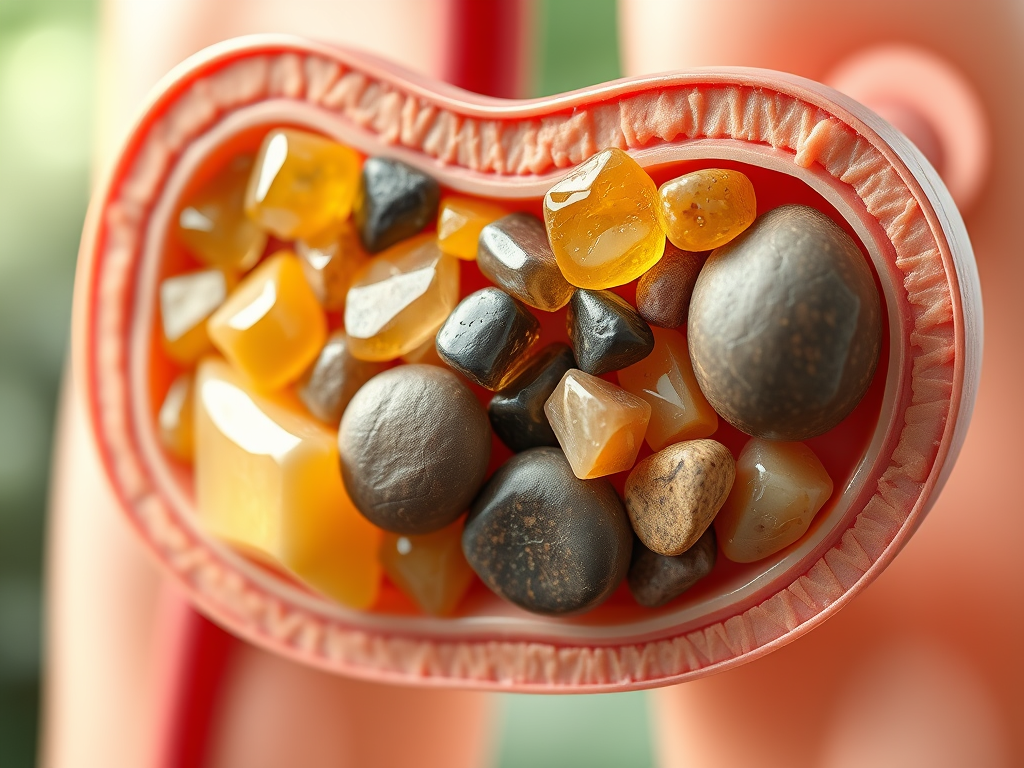
What Are Gallstones?
Gallstones are solid, pebble-like deposits that form in the gallbladder, a small organ located under the liver. The gallbladder stores bile, a digestive fluid that helps break down fats. When bile contains too much cholesterol or bilirubin or when the gallbladder does not empty properly, gallstones may form.
Gallstones can range in size from as small as a grain of sand to as large as a golf ball. Some people may have gallstones without symptoms, while others experience severe abdominal pain and digestive issues.
Types of Gallstones
There are two main types of gallstones:
- Cholesterol Gallstones
1-Most common type
2-Yellow-green in color
3-Formed due to excess cholesterol in bile - Pigment Gallstones
1-Dark brown or black
2-Made of bilirubin
3-Often associated with liver disease or blood disorders
Causes of Gallstones
Gallstones develop due to an imbalance in the substances that make up bile. Common causes include:
1-Excess cholesterol in bile
2-Incomplete emptying of the gallbladder
3-Obesity or rapid weight loss
4-High-fat, low-fiber diet
5-Pregnancy
6-Diabetes
7-Liver disease
8-Genetic predisposition
Symptoms of Gallstones
Many people with gallstones remain asymptomatic. However, when gallstones block bile ducts, symptoms may include:
1-Sudden pain in the upper right abdomen
2-Pain radiating to the back or right shoulder
3-Nausea and vomiting
4-Bloating and indigestion
6-Fatty food intolerance
7-Fever and chills (in case of infection)
8-Yellowing of skin or eyes (jaundice)
This intense pain episode is known as a gallbladder attack.
Diagnosis of Gallstones
Gallstones are commonly diagnosed using:
1-Ultrasound (most common method)
2-CT scan
3-Blood tests to check liver function
4-MRI or HIDA scan in specific cases
Treatment Options for Gallstones
Treatment depends on the severity of symptoms:- Asymptomatic Gallstones
-Usually do not require treatment
-Regular monitoring is advised - Symptomatic Gallstones
- -Pain management medications
-Bile-dissolving medications (for small cholesterol stones)
-Surgical removal of the gallbladder (cholecystectomy), the most effective treatment
Prevention of Gallstones
You can reduce the risk of gallstones by:
Following -a balanced, fiber-rich diet
-Exercising regularly
-Maintaining a healthy BMI
-Avoiding crash diets
-Managing diabetes and cholesterol levels
Gallstones and Lifestyle Factors
Lifestyle habits significantly influence gallstone formation. Sedentary lifestyle, unhealthy eating patterns, and stress can disrupt digestion and bile flow. Adopting healthy lifestyle practices supports gallbladder health and overall digestive wellness.
Nutritional Support for Gallstones
Proper nutrition plays a key role in managing gallstones. Learn about the best foods, dietary tips, and nutritional support to prevent gallstones naturally.
Role of Nutrition in Gallstones
Nutrition plays a vital role in the prevention and management of gallstones. Gallstones commonly form due to excess cholesterol in bile or improper gallbladder emptying. A balanced diet can improve bile composition, support gallbladder function, and reduce the risk of gallstone formation and attacks.
Best Foods for Gallstones - High-Fiber Foods
Fiber helps regulate cholesterol levels and improves digestion.
Include:
Whole grains (oats, brown rice, whole wheat)
Fruits (apple, pear, berries)
Vegetables (spinach, carrot, broccoli)
Legumes (lentils, chickpeas, beans) - Lean Protein Sources
Lean proteins reduce bile cholesterol saturation.
Include:
Fish
Skinless chicken
Egg whites
Low-fat dairy
Plant proteins (tofu, pulses)
- Asymptomatic Gallstones
- Healthy Fats (in Moderation)
Small amounts of healthy fats stimulate proper gallbladder emptying.
Include:
Olive oil
Flaxseed oil
Nuts and seeds (limited quantity) - Vitamin-Rich Foods
Certain vitamins help reduce gallstone risk.
Vitamin C: Citrus fruits, amla, guava
Magnesium: Green leafy vegetables, nuts
Vitamin E: Seeds and whole grains - Adequate Hydration
Water helps maintain bile consistency and prevents bile thickening.
Recommendation:
8–10 glasses of water daily
Foods to Avoid in Gallstones
1-Fried and oily foods
2-High-fat meat and processed meat
3-Butter, ghee, cream
4-Full-fat cheese and dairy
5-Refined flour products (maida)
6-Sugary desserts and soft drinks
7-Excess caffeine and alcohol
Dietary Guidelines for Gallstones
1-Eat small, frequent meals
2-Avoid long fasting periods
3-Maintain a healthy body weight
4-Avoid crash diets and rapid weight loss
5-Limit saturated and trans fats
6-Prefer steamed, boiled, or grilled foods
Sample Gallstones-Friendly Diet Pattern
Early Morning: Warm water or lemon water-1 glass
Breakfast: Veg Oats with egg white-1 bowl(medium)
Mid-Morning: Fruit-1 or coconut water-1 glass
Lunch: Brown rice-1 bowl(medium)/roti-2, dal, vegetable sabzi, salad-1 bowl(medium)
Evening Snack: Roasted chana or sprouts-1 bowl9small), green tea-1 cup
Dinner: Light meal with vegetables and lean protein-1 bowl(medium)
Nutritional Goals in Gallstones Management
1-Reduce cholesterol saturation in bile
2-Improve gallbladder motility
3-Support liver function
4-Prevent gallstone attacks
5-Maintain long-term digestive health
Nutritional support is an essential part of gallstones management. A high-fiber, low-fat, and nutrient-rich diet helps prevent gallstone formation and reduces symptoms. Along with healthy lifestyle habits and medical guidance, proper nutrition can significantly improve gallbladder health.
 NUTRITIOUS_PHONICS
Leave a comment